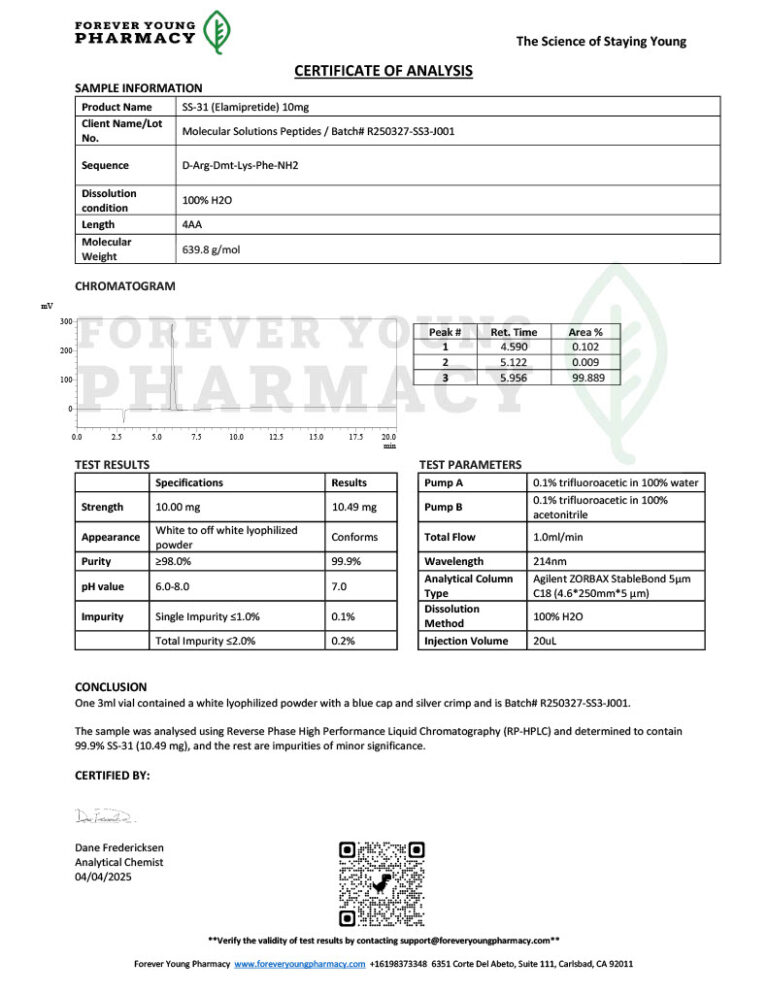
Peptide Purity Overview 98%, 99% & Research-grade Discussed Prg The chromatogram is the most important visual information aspect on an HPLC peptide test record. It is a graph with time on the horizontal axis and detector action, usually UV absorbance, on the upright axis. Each top represents a part that was divided and found. Also minor contaminations can change results, lower reproducibility, or present undesirable variables into a research study. Scientists depend upon accurate, verified substances to guarantee their findings are both valid and regular. Expertise of pureness levels will certainly additionally direct you if you ever before need a higher purity peptide for a particularly delicate assay. Ultimately, getting the pureness level right implies more reliable scientific research-- which's the utmost goal for any type of researcher. BOC Sciences, with its robust logical platform and specialist team, concentrates on high quality screening services for peptide raw materials, peptide microspheres, peptide nanoparticles, and peptide formula preparations. Peptide purity refers to the percentage of your sample that is the correct, full-length peptide series, free from other peptide-related impurities. You can learn more regarding our analytical screening methods on our screening and top quality web page. If the target peptide's optimal represent 99.1% of the complete peak area, the peptide is reported as 99.1% pure by HPLC. The release procedure of peptide formulas is intricate, and a lack of scientific information impedes development. We develop in vitro release versions, offering full release contours and kinetic version analysis to maximize item layout. Residual natural solvents, steel ions, or by-products from synthesis may cause harmful adverse effects. Consistent injection quantity issues since overwhelming the column can broaden optimals, misshape pureness price quotes, or hide neighboring contaminations. For researchers dedicated to quality-verified peptide research, SeekPeptides gives extensive support on protocols, dosing, and vendor analysis. The combination of evidence-based educational sources and practical devices helps researchers make educated choices throughout their peptide journey, from initial supplier selection through method optimization. Understanding how much time peptides require to work assists set sensible expectations, yet confirmed product quality ensures the timeline evaluation is valid. Some suppliers providing quality items urge third-party screening and might reimburse testing prices if outcomes validate their cases. This confidence indication recommends the supplier trust funds their product quality. In accordance with ICH guidelines, verified techniques suggest the lab has actually established the test's accuracy, accuracy, discovery restrictions, etc, making certain the information you obtain are dependable. Peptide pureness screening is the process of confirming that a peptide example contains just the intended sequence-- and no significant impurities or results from synthesis. Since peptides are created via complex chemical procedures, trace impurities can create naturally. Testing enables researchers to recognize exactly what's in the vial, confirming both identity and quality. Determining peptide purity is commonly finished with logical high-performance liquid chromatography (HPLC), commonly paired with mass spectrometry (MS) for identification verification. Nootropic peptides like Semax and Selank influence central nervous system feature. The risks of using infected or misidentified items in cognitive applications call for verification investment. Peptides like ipamorelin and sermorelin stimulate natural hormone production. Purity matters due to the fact that pollutants may have their very own organic task, confounding results. This remarkable source allows researchers to verify items without expense, though shipping expenditures and example preparation remain your obligation. For scientists collaborating with particular compounds like BPC-157 or TB-500, mass spectrometry verification ensures you're dealing with the actual substance as opposed to another thing completely. This method divides peptide mixtures and measures the relative amounts of various parts. When a COA specifies "99% pureness by HPLC," this means the analysis revealed 99% of the identified product was the target peptide, with only 1% being impurities. These records supposedly validate purity, identification, and various other high quality metrics. Innovative Peptides suggests a collection of different pureness degrees to assist you choose the appropriate peptide purity for peptide-based assays and applications. The following list reveals the advised peptide purity levels required for various peptide applications. Peptides are extensively utilized in the medical looks, cosmetics, and biomedical areas due to their unique organic activity and broad application possibility. Nevertheless, the high quality of peptide items directly affects their efficiency and security, making exact high quality screening solutions critical. BOC Sciences uses detailed peptide screening services to clients across industries, making sure items meet rigorous market demands and assuring product uniformity, safety and security, and effectiveness. It also sustains traceability-- each set's lab recognition report can be tied to its COA and regulatory filings, creating a clear paper trail.
Laboratory Records & Independent Testing
Peptide screening is analytical confirmation of a peptide example. In COA testimonial, it normally includes HPLC pureness testing, mass spectrometry identity confirmation, and batch-specific documentation showing the tested lot, method, results, and date. With years of analytical screening experience and advanced tool systems, BOC Sciences gives comprehensive peptide top quality testing solutions across the whole process from basic materials to formulas. Third-party laboratory validation can greatly help in this compliance process. The resulting information are formatted right into records that regulatory authorities expect.How Pureness Is Determined: Hplc Described Simply
- The majority of peptide purity evaluations make use of reversed-phase HPLC (RP-HPLC).Organizations buying wholesale research peptides commonly prioritize consistency and quality verification.These independent facilities offer the logical confirmation that divides legit items from counterfeits, exact focus from weakened substances, and pure peptides from polluted ones.The target peptide elutes at a characteristic retention time, and impurities elute at various times-- separating them spatially on the chromatogram.
What machine is made use of to test peptide purity?
Peptide pureness is routinely determined by HPLC (high efficiency fluid chromatography). This approach makes it possible for separation and relative metrology of each peptide synthesized. If paired to a mass spectrometer (MS), this gives molecular mass/ identification details of the target peptide and going along read more with contaminations.